
Choosing the Ideal Combustion Configuration for Direct-Fired Thermal Processes
Direct-fired heating systems inject combustion products straight into the process air stream, demanding absolute control over reaction chemistry. Engineers evaluating mixing configurations must weigh stoichiometric precision against operational safety when choosing burner equipment.
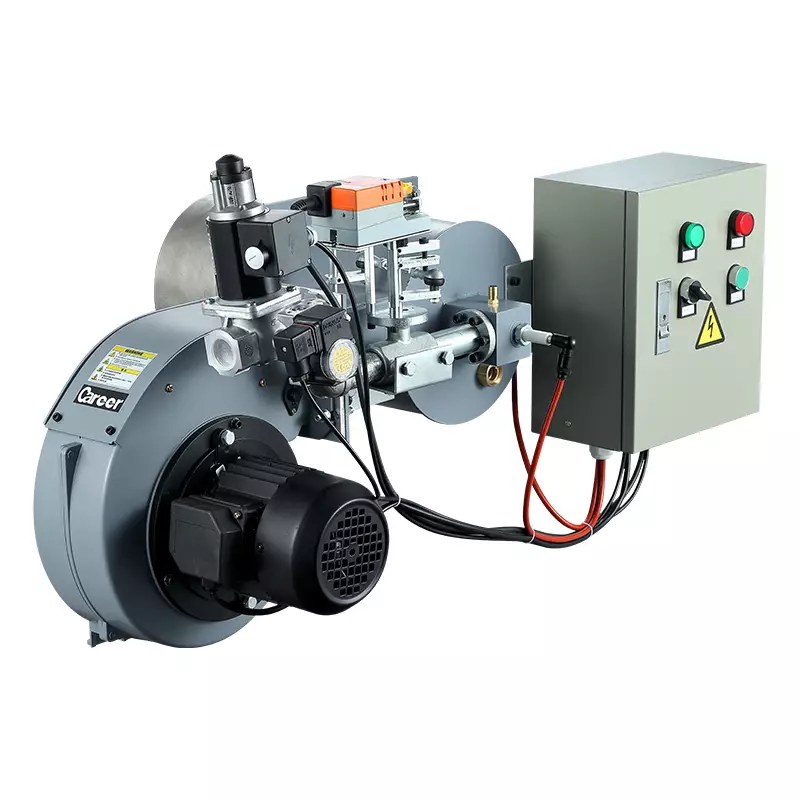
The core debate centers on whether fuel and air combine upstream inside a mixing chamber or separately at the port exit. This fundamental mechanical difference dictates flame stability, emissions output, and suitability for sensitive manufacturing lines.
Mechanics of Premixed Fuel Delivery and Stoichiometric Precision
Premixed systems blend fuel and combustion air thoroughly before the mixture reaches the primary burner head ports. This intimate upstream blending ensures near-perfect chemical stoichiometry, allowing clean combustion with minimal excess air requirements.
Such precision maximizes thermal efficiency in applications where rapid heat transfer and uniform temperature profiles are paramount. Operating a pre-mixed arrangement requires meticulous velocity control to prevent the flame front from moving backward into the manifold.
Maintaining strict volumetric ratios prevents hazardous fuel-air pockets from forming inside internal supply piping networks. Microprocessor controllers regulate proportional gas valves and combustion blowers to keep mixture velocities constant across operating shifts.
However, even minor variations in fuel composition can disrupt this delicate stoichiometric balance during continuous production cycles. Facility engineers must account for shifting gas densities to prevent thermal fluctuations in sensitive processing environments.
Flashback Hazards and Flame Propagation Velocities
Gas velocity must continually exceed the chemical flame propagation speed to prevent destructive internal flashbacks during operation. Hydrocarbon fuels like methane exhibit specific burning velocities that change dynamically with preheat temperatures and fuel ratios.
When operating an industrial gas burner with premixed gases, pressure fluctuations can trigger sudden flame recession. Engineering teams must install flame arrestors and high-speed safety shut-offs to protect upstream supply lines from ignition failures.
Flame stability limits narrow significantly when high-hydrogen gases or elevated preheat temperatures enter premixed combustion chambers. If duct pressure drops unexpectedly, the reaction front travels upstream faster than incoming fuel streams can push it forward.
This mechanical failure mode destroys internal mixing components and requires costly emergency repairs across the production floor. Consequently, robust pressure sensing interlocks remain mandatory for any safe premixed installation.
Operational Safety and Port Separation in Nozzle-Mix Architecture
Nozzle-mix systems eliminate flashback risks entirely by keeping fuel and air completely separate until they discharge from the port. Each stream enters the combustion zone independently, relying on turbulence to achieve mixing and oxidation at the flame front.
This decoupled design provides exceptional operational safety when processing variable fuel compositions or fluctuating line pressures. Heavy manufacturing facilities prefer this configuration because it tolerates minor air-fuel ratio imbalances without destabilizing the primary reaction envelope.
Physical separation of fuel and oxygen prevents pre-ignition hazards inside restricted burner housing assemblies during high-fire steps. Technicians can modulate firing rates rapidly without fearing destructive pressure spikes or flame detachment issues.
This inherent flexibility simplifies burner management system programming and reduces unexpected emergency shutdowns during production shifts. Plant operators gain reliable thermal performance across wide operating ranges without complex mechanical intervention.
Temperature Uniformity Across Direct-Fired Airstream Applications
Direct-fired air heating requires expansive, luminous flames that distribute thermal energy evenly across high-velocity process ducts. A well-designed industrial natural gas burner utilizing nozzle-mix technology generates stable, progressive heat release profiles.
This gradual reaction prevents localized hot spots that can scorch sensitive web products or warp metal drying chambers. Thermal uniformity directly impacts product quality in continuous textile drying, grain curing, and chemical finishing lines.
Convective heat transfer efficiency depends heavily on maintaining uniform gas velocities throughout the entire cross-section of the ductwork. If combustion gases stratify, uneven drying results in significant product scrap and wasted thermal energy.
Proper nozzle placement ensures that secondary air mixes thoroughly with reactive fuel streams before reaching the work zone. Advanced engineering guarantees that large-scale manufacturing ovens maintain strict temperature tolerances from wall to wall.
Engineering Trade-Offs in Industrial Direct-Fired Processes
Choosing between these two distinct mixing technologies depends heavily on the specific operational parameters of the heating project. Premixed units excel in enclosed radiant tube applications where tight spatial geometry and high convective heat transfer dominate.
Conversely, direct-fired air heaters rely on nozzle-mix principles to safely handle massive volumes of moving process air. Industrial operators can consult specialized engineering teams at Career Burner to evaluate airflow dynamics and thermal constraints.
Procurement decisions must account for turndown ratios, maintenance intervals, and regulatory compliance standards across the plant lifecycle. Advanced thermal hardware engineered by Career Burner bridges operational gaps by delivering robust mixing performance under harsh operating conditions.
Selecting the right combustion architecture ensures long-term process reliability and protects capital equipment investments from premature mechanical wear. Careful initial planning prevents costly redesigns after equipment commissioning.
Optimizing Combustion Efficiency and Long-Term System Integration
Balancing thermal efficiency with operational security remains the ultimate objective when outfitting modern direct-fired thermal systems. Implementing intelligent electronic controls allows real-time modulation of air and gas flows regardless of external environmental variables.
A reliable industrial gas burner equipped with digital trim systems maintains peak stoichiometry throughout production shifts. Modern manufacturing plants depend on this technological precision to minimize fuel waste and achieve environmental compliance targets effortlessly.
Facility managers seeking reliable thermal solutions benefit from partnering with experienced equipment manufacturers like Career Burner for custom retrofits. Comprehensive pre-installation analysis prevents common sizing errors and ensures seamless integration with existing plant ductwork and safety interlocks.
Upgrading to an efficient industrial natural gas burner transforms raw energy consumption into a predictable, highly optimized operational asset. Strategic equipment selection secures enduring competitive advantages for industrial enterprises navigating complex global energy markets.