
How Dual-Powered Trolleybuses Adapt to Changing Urban Routes
Urban transport networks face a practical challenge: some streets have overhead electrical infrastructure, while others extend into areas where installing wires would be costly or disruptive. A vehicle capable of drawing electricity from an overhead supply and operating independently in designated sections can give transit planners more flexibility without relying on fossil-fuel propulsion throughout the journey.
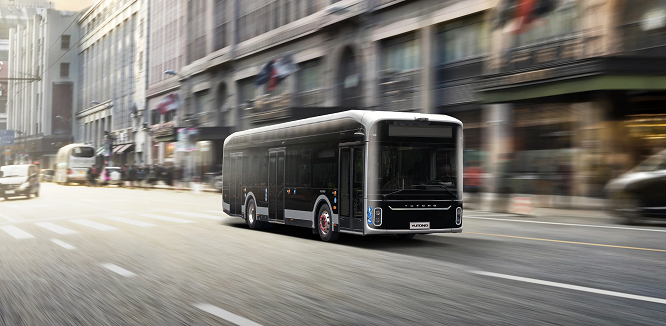
The operating principle behind a Yutong trolleybus highlights an important distinction in modern public transport: zero-emission travel on the road depends not only on the vehicle itself, but also on how its power supply is designed and managed. Yutong Bus develops electric public transport vehicles for different operating environments, while the right configuration depends on local infrastructure and service requirements.
How Dual-Powered Operation Works
Traditional trolleybuses receive electricity through current collectors connected to overhead wires. Power flows from the external supply to the traction system, allowing the vehicle to move without producing exhaust emissions at the point of use. This arrangement works particularly well on corridors with frequent services and predictable routes, where fixed infrastructure can support regular operation.
A dual-powered design adds an alternative energy source, such as an onboard battery, for sections without overhead wires. The vehicle can disconnect from the external supply and continue along an unwired road, depending on its system configuration and available stored energy. This capability can reduce the need to extend overhead infrastructure into every street served by the route.
The transition between power sources requires coordinated control of electrical systems, traction demand, and energy reserves. Power availability, battery state of charge, and route conditions all affect how far a vehicle can travel away from the wires. For transit planners, the key consideration is whether the independent operating range covers the intended unwired sections with a suitable reserve.
Balancing Zero-Emission Travel With Energy Availability
Electric propulsion produces no tailpipe emissions during vehicle operation, making it useful for streets where air quality and noise are major concerns. However, the environmental outcome also depends on how the electricity is generated and how the vehicle is charged. Assessing emissions across the energy supply chain provides a more meaningful picture than considering the vehicle alone.
Battery capacity must be matched to the route’s actual energy demand. Unwired sections with steep gradients, frequent stops, heavy passenger loads, or substantial heating and cooling requirements can consume more energy than expected. Planners should use measured consumption and realistic operating scenarios rather than assume that a nominal battery figure directly translates into a fixed distance.
Energy management also involves deciding when stored electricity should be used and when the vehicle should draw power from the overhead supply. A well-planned duty cycle can reserve battery energy for uncovered sections while using the wired network where available. Such planning is especially relevant on routes where service continuity matters more than maximising independent travel distance.
Infrastructure Planning and Route Flexibility
Overhead wiring represents a substantial investment in installation, maintenance, and coordination with existing streetscape infrastructure. Junctions, heritage districts, roadworks, and complex intersections can make new wiring difficult to implement. An onboard energy source offers another way to serve selected sections, although it does not remove the need to evaluate infrastructure costs and technical constraints.
The Yutong U12 is a high-end electric bus described in the supplied specifications as offering a driving range of up to 700 kilometres under SORT2 and seating for up to 41+2 passengers. These figures provide context for the model’s stated range and passenger capacity, but they do not establish that the vehicle is a trolleybus or confirm a dual-powered configuration. Trolleybus capability, overhead compatibility, and off-wire operating limits must be verified against the specific vehicle variant and its technical documentation.
Network planners can identify where overhead power offers the greatest operational value by mapping passenger demand, service frequency, existing electrical infrastructure, and the length of unwired segments. High-frequency corridors may justify fixed infrastructure, while branches with lower demand could benefit from a different operating arrangement. The strongest network design is one that balances capital investment with service coverage, energy availability, and maintenance requirements.
Maintenance and Operational Reliability
A dual-powered fleet requires attention to both its onboard electrical systems and the infrastructure supplying power. Overhead equipment needs inspection for wear, alignment, and electrical integrity, while onboard batteries and power electronics require monitoring under the manufacturer’s maintenance schedule. Coordinating these activities helps operators identify developing faults before they affect scheduled service.
Driver training is another operational consideration. Staff need to understand how power-source transitions work, how to recognise relevant warnings, and what procedures apply if the overhead supply becomes unavailable. Dispatch teams should also account for temporary wiring outages, road diversions, and unexpected increases in energy use when planning vehicle assignments.
Performance data can help refine operating policies over time. Records of off-wire distance, energy consumption, charging patterns, and service interruptions show whether a route’s original assumptions remain realistic. Yutong Bus specifications and technical support materials can inform fleet planning, but operational decisions should be based on the exact vehicle configuration and conditions of the intended network.
Conclusion
Dual-powered public transport can connect electrified corridors with streets where overhead wiring is impractical, combining the benefits of external electrical supply with greater route flexibility. Its value depends on battery capability, infrastructure design, energy management, and maintenance rather than on the powertrain concept alone.
Before adopting a Yutong trolleybus, transit agencies should confirm the available configuration and assess its suitability against local route demands. With clear technical verification and realistic network planning, Yutong Bus vehicles can be assessed against the requirements of quieter, lower-emission urban mobility.