
5000 Nits and 5000:1 Contrast: Backdrops That Stay Readable in Daylight
Bright lettering can remain visible on an outdoor backdrop while the darker image behind it looks washed out. Raising the output may make the lettering more prominent without restoring the missing shadow detail. Several aspects of the picture are involved, even though the audience experiences them together as a single image.
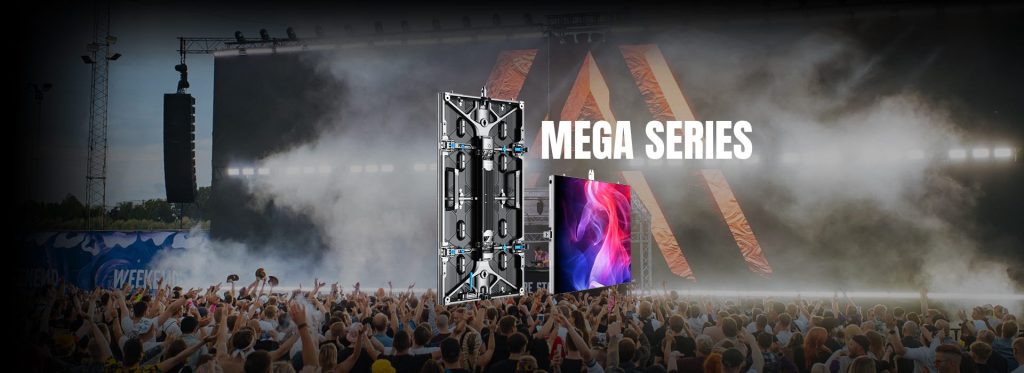
Daytime festival sets and outdoor launches expose that difference clearly. A giant LED screen rental specification needs to explain how bright areas separate from dark ones, how gradual tones survive and how moving images behave. Diagnosing those three phenomena gives brightness, contrast, grayscale and refresh rate separate jobs within the same display.
Why Bright Whites Can Leave Gray Blacks
Contrast ratio relates the luminance of the brightest white to the darkest black a display produces. A gray-looking dark area narrows the visible separation between those extremes. Brightness describes light output, whereas contrast describes a relationship; a high white level alone says little about how the darker parts of a picture will read.
YES TECH pairs black LEDs with a 5000:1 contrast ratio in its MEGA rental display. Black-body LED packages reduce stray light, supporting separation between light and dark content. The published ratio describes the display specification, while ambient light at an outdoor event also influences the contrast that reaches an observer.
MEGA’s published parameter table lists a white-balance brightness of 5,000 nits for the P3.91, P4.63, and P5.68 versions. Actual daylight visibility still depends on ambient lighting and display conditions. Matching an actual supplied version to the event avoids treating every cabinet in the series as an identical brightness configuration.
For LED backdrop screen rental, a dark field beside bright text offers a more revealing comparison than a white field alone. Both regions can be examined under the expected daylight. If the lettering remains strong but the background loses depth, the observation points toward light-dark separation, including ambient conditions, rather than simply insufficient peak output.
Follow the Tones Between Black and White
Between the brightest and darkest areas lie the transitions that give faces, clothing and shaded objects their visible form. Two pictures may have similarly strong extremes yet show different amounts of detail between them. Grayscale concerns these intermediate levels, making it a separate part of the diagnosis from peak brightness.
MEGA specifies 16-bit grayscale. Its role is tonal gradation, including subtle changes through shaded imagery, not an increase in the physical number of pixels. A giant LED screen rental displaying performer close-ups depends on those transitions as well as the stronger edges used by large text and graphic symbols.
Calibration and color consistency extend the examination across the assembled wall. A gradual tone that appears different on neighboring cabinets can interrupt an otherwise continuous image. Representative shadow detail and smooth tonal passages reveal whether the assembled display preserves the intended transitions, directing attention to grayscale handling and whole-wall consistency.
Keeping the same sample content during successive checks makes adjustments easier to interpret. A change in brightness can then be compared against the same dark passage, instead of against unrelated footage. The observation remains tied to a particular setting and ambient condition, providing a reference when the production team reviews the next adjustment.
Separate Image Timing from Image Contrast
Refresh rate describes the display’s temporal behavior, a different dimension from black level, tonal depth or pixel density. A sharp still image cannot establish how the screen will appear throughout a camera exposure. MEGA has a refresh rate of at least 7680 Hz, providing a relevant specification for examining this timing relationship.
Live viewing and camera capture also ask different questions. An image may appear steady to the audience while a particular camera setting reveals an unwanted pattern. In LED backdrop screen rental, camera shutter and processing settings therefore enter the test alongside the display configuration. The actual production camera supplies evidence that a specification sheet alone cannot provide.
Moving material adds another observation. The test can compare broad motion with detailed imagery while retaining the intended playback and capture settings. A temporal artifact then has a precisely defined context for investigation, instead of being confused with poor contrast or missing shadow detail. No refresh figure guarantees an artifact-free result with every camera configuration.
Put the Actual Program on the Whole Wall
A whole-wall rehearsal brings the separate diagnoses into the conditions of the performance. The test combines expected daylight, intended brightness settings and real program material. For giant LED screen rental, observation from representative viewing distances can reveal whether a problem affects the entire image, a particular tonal range or only certain content.
Text, performer imagery, dark passages and motion each expose different weaknesses. A fading background suggests examination of light-dark separation; uneven tonal passages direct attention toward calibration; camera-only patterns call for timing checks. Results can also prompt content changes, such as increasing the visual separation between an essential message and its background.
Names on screen, expressions in close-ups and detail within dark imagery provide concrete targets for LED backdrop screen rental. MEGA’s brightness, contrast, grayscale and refresh specifications address different parts of those targets.
Their value becomes visible when the actual wall carries the actual material under the intended conditions. Readability is established through that combined observation, with the daylight image and camera result guiding any adjustment before the program begins.