Regulatory Compliance in Dental Equipment: What Practices Should Expect From Manufacturers
Dental equipment must do more than support daily clinical work; it must also meet applicable safety, quality, and documentation requirements. Before purchasing new equipment, a clinic needs to understand which regulations apply in its market, how conformity is demonstrated, and what records should accompany installation and maintenance.
A qualified dental unit manufacturer should be able to explain these obligations clearly rather than relying on broad claims about product quality. For practices evaluating an electric dental chair, regulatory compliance is not simply a purchasing formality. It affects patient protection, staff safety, equipment reliability, and the clinic’s ability to demonstrate responsible management.
Understanding the Regulatory Framework
Medical device requirements vary by country and by the intended purpose of the equipment. In the European Union, relevant devices may fall under the Medical Device Regulation (MDR), while the United States regulates medical devices through the Food and Drug Administration (FDA). Other markets maintain their own registration, importation, and conformity assessment procedures. Clinics should identify the rules applicable to their location before assuming that approval in one jurisdiction automatically permits sale or use in another.
Standards also play an important role in demonstrating safety and performance. The IEC 60601 series addresses basic safety and essential performance for medical electrical equipment, while ISO 14971 provides a framework for medical device risk management. Depending on the device and its configuration, other standards may address electromagnetic compatibility, usability, or particular clinical functions. A dental unit manufacturer should clarify which standards apply to a specific model and provide supporting documentation where appropriate.
Regulatory terminology deserves careful attention because registration, certification, and conformity assessment are not interchangeable. A product may carry a declaration of conformity or other evidence relevant to a particular market, but the meaning of each document depends on the applicable legal framework. Clinics should verify the issuing organization, product identification, scope, and validity of any evidence provided. Clear records help distinguish documented compliance from unsupported marketing statements.
Checking Documentation Before Purchase
Technical documentation provides a practical starting point for evaluating compliance. Relevant materials may include product specifications, instructions for use, electrical safety information, cleaning and disinfection procedures, maintenance schedules, and applicable conformity documents. The equipment’s model number and configuration should match the paperwork. If accessories or optional functions are added, the clinic should establish whether the documented assessment covers those changes.
Traceability matters just as much as the presence of certificates. Labels and records should identify the manufacturer, model, serial or batch information where applicable, and other details required by the destination market. A dental unit manufacturer should also explain how product changes, safety notices, and corrective actions are communicated to customers. These details become particularly important when a clinic operates several treatment rooms or needs to investigate an equipment issue months after installation.
Purchasing teams can make the review more efficient by requesting a consistent document package from every potential supplier. Instead of asking only whether a product is certified, they can request the exact documents, applicable standards, and market authorization details relevant to their intended use. Any unclear claim should be checked with the appropriate regulatory authority or a qualified compliance professional before purchase. This approach reduces uncertainty without assuming that one document answers every regulatory question.
Evaluating Safety Features and Product Design
An electric dental chair combines electrical components, mechanical movement, patient positioning, and interfaces used by clinical staff. Its assessment should consider foreseeable hazards such as unintended movement, instability, electrical faults, and pinch points. Safety-related functions need to be described in the technical documentation, while operating instructions should explain proper use and relevant limitations. Clinics should also confirm whether installation and servicing must be performed by trained personnel.
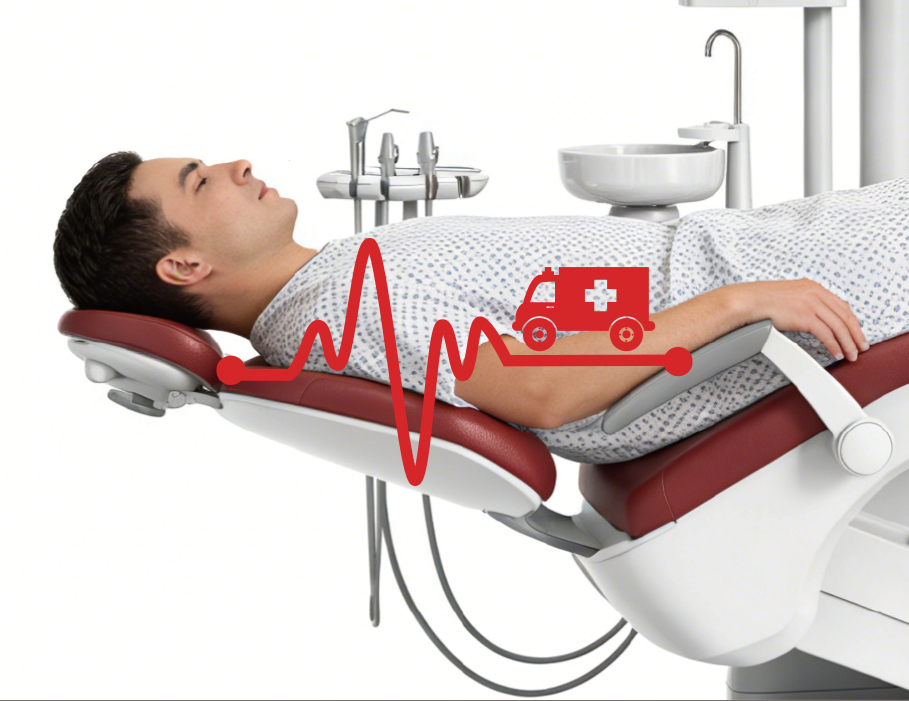
The Roson Security Master S9+ includes a one-touch emergency positioning function intended to move the chair into an emergency position to support a rapid clinical response. This feature illustrates why a product evaluation should consider more than ordinary adjustment functions: staff need to understand how emergency controls operate, whether the movement suits the clinical scenario, and how the function is tested and maintained. Its availability does not replace clinical emergency protocols, staff training, or verification of the model’s applicable regulatory documentation.
Hygiene and infection prevention require a separate review. Accessible surfaces, removable components, waterline management, and compatible cleaning agents can affect how consistently a treatment area is maintained. An electric dental chair should be accompanied by instructions that specify approved cleaning methods and any restrictions on disinfectants or chemicals. Clinics should not assume that a surface is compatible with every cleaning product simply because it appears durable. Written procedures, staff training, and routine inspection help translate the manufacturer’s instructions into reliable daily practice.
Conclusion
Regulatory readiness depends on evidence, not assumptions. Clinics can make more informed equipment decisions by checking market-specific requirements, reviewing model-level documentation, evaluating foreseeable risks, and planning for installation and ongoing maintenance. A dependable dental unit manufacturer should be able to explain the limits of its compliance claims and provide documentation that matches the equipment supplied.
Roson, like any manufacturer considered for clinical use, should be assessed against the requirements of the destination market, the needs of the practice, and the evidence available for the specific configuration. This disciplined process gives clinics a clearer basis for protecting patients, supporting staff, and managing equipment throughout its service life.