
Medical AM Teams Need Cross-Functional Events More Than General Technology Shows
Medical additive manufacturing rarely fits within the boundaries of one technical department. Design geometry, material behavior, clinical requirements, process control, inspection, and post-processing can all influence whether a manufacturing approach is appropriate for a specific use case.
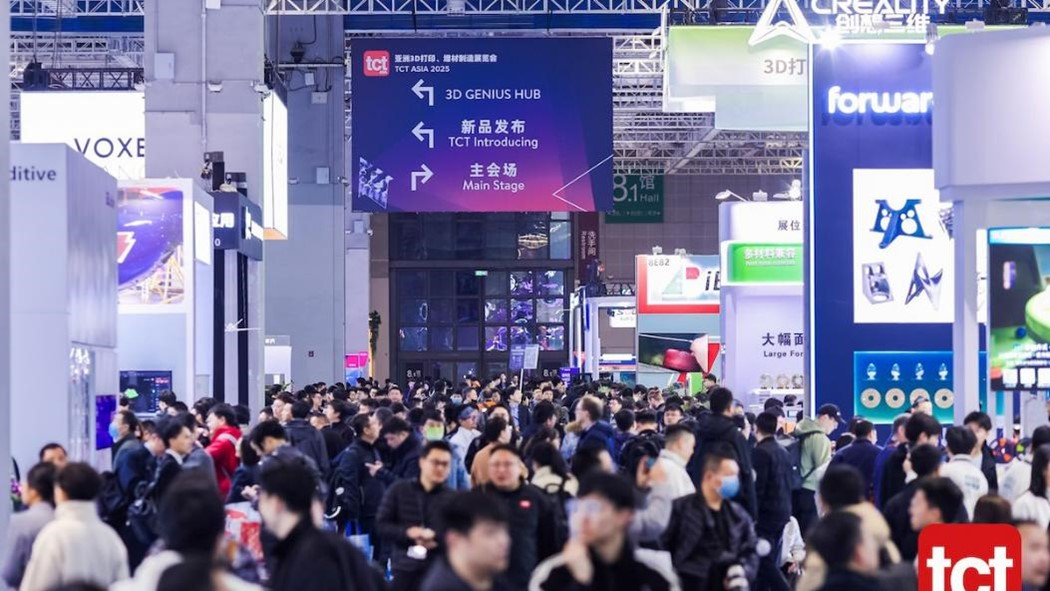
Bringing these viewpoints into the same discussion, a focused 3D printing conference allows technical specialists to examine applications from several directions. TCT Asia serves as a knowledge-exchange and networking hub where technology users can discuss practical developments alongside broader changes across the additive manufacturing field.
Map the Full Medical Application
Patient-specific production changes the way an AM project should be evaluated. An anatomical model, surgical guide, implant, or customized instrument may begin with digital data, yet the final result depends on much more than the initial geometry. Material characteristics, dimensional requirements, surface condition, cleaning procedures, and intended clinical use can all affect the manufacturing route.
The scope of a medical additive manufacturing forum becomes more meaningful when these factors are considered together. A designer might prioritize complex internal structures, while a clinical specialist could be more concerned with fit or handling. Manufacturing engineers then need to determine whether those requirements can be translated into a repeatable workflow without creating excessive secondary operations.
Different applications also call for different evaluation methods. A visual inspection may be sufficient for an anatomical demonstration model, whereas a functional medical component may require dimensional measurement, material verification, surface analysis, or other forms of process documentation. The intended use should shape the questions asked long before equipment comparisons begin.
Connect Technical Roles Through Shared Cases
Medical AM projects often involve specialists who use different technical language to describe the same challenge. Designers may discuss topology or geometry, production teams may focus on process parameters, and quality professionals may concentrate on inspection and traceability. Without a shared application case, important requirements can remain isolated within individual departments.
A 3D printing conference can help bridge these perspectives by using real projects as common reference points. Instead of discussing material properties in isolation, participants can examine how a material behaved in a particular application, what processing conditions were involved, and which downstream steps influenced the final result. Such context makes technical information easier to interpret.
Cross-functional discussion also exposes trade-offs that may not appear in a single discipline’s analysis. Greater geometric freedom could introduce more complex inspection requirements; customization may increase digital workflow demands; a new material could require additional post-processing. Examining these relationships helps teams understand the broader implications of an AM decision.
Learn from Evidence Rather Than Demonstration Appeal
Technology demonstrations can attract attention because the results are easy to see. Medical applications, however, often depend on characteristics that are less visible, including dimensional consistency, material behavior, surface quality, cleaning compatibility, and process documentation. A finished sample alone cannot explain how reliably it can be produced or what controls were required.
The TCT Asia Summit creates space for application-oriented knowledge exchange, including discussions involving technology users and recent 3D printing cases. Within a medical additive manufacturing forum, such examples can provide useful questions about why a project was undertaken, what manufacturing challenge it addressed, and which evidence was used to assess its outcome.
TCT Shenzhen 2026, scheduled for October 14–16, adds another opportunity to examine medical applications alongside developments in other industrial sectors. Comparing approaches across healthcare, aerospace, moulding, electronics, and consumer applications can reveal process concepts that may have wider relevance, while still leaving room for medical-specific validation and regulatory considerations.
Turn Event Discussions into Practical Follow-Up
Useful technical notes should remain valuable after the exhibition closes. Instead of recording only machine specifications, teams can capture the application, material category, process route, quality considerations, post-processing requirements, and unresolved questions associated with each discussion. This information provides a stronger foundation for later internal evaluation.
The next step is to connect those notes with actual development priorities. If a discussion raises questions about surface treatment, a materials specialist and manufacturing engineer can investigate that issue together. If customization appears promising, the digital workflow can be examined alongside production capacity and quality controls. Each follow-up should address a specific uncertainty rather than attempting to evaluate an entire technology at once.
TCT Asia is scheduled for May 27–29, 2027, offering another point for teams to follow application developments and compare technical perspectives. Information gathered at the Shenzhen event can become a reference for later discussions, helping specialists track how medical AM concepts develop while separating general industry trends from requirements specific to their own applications.
Conclusion
Medical AM decisions become more complicated precisely because the final application brings several technical disciplines together. Geometry cannot be separated entirely from manufacturing, material selection can affect post-processing, and production methods may influence inspection or clinical usability. A cross-functional 3D printing conference can make these connections easier to examine by placing application experience alongside engineering and manufacturing knowledge.
The practical value of a medical additive manufacturing forum comes from the questions it generates after the event as much as the information shared during it. TCT Asia provides a setting for technology users and industry specialists to exchange application knowledge, while TCT Shenzhen offers a South China context in which medical and other manufacturing cases can be considered side by side. Such discussions give medical AM teams a broader technical framework for deciding which ideas need deeper investigation or more evidence.