
Residential Energy Storage Batteries: Lessons from Commercial Solar Suppliers
Residential battery projects may be smaller than commercial installations, but many of the same planning principles still apply. Capacity is only one part of battery selection. Installers also need to consider household loads, inverter compatibility, safety, installation space, and possible expansion. Experience from commercial solar power projects offers useful lessons because these projects usually require careful coordination between generation, storage, electrical equipment, and actual energy demand.
For a home energy storage system, this approach can make battery selection more practical. Instead of starting with a battery specification, installers can first study when electricity is used, how much solar energy is available, and what the homeowner expects from storage. These questions create a clearer basis for system design.
Commercial Experience Starts with the Load
Commercial solar suppliers usually examine electricity demand before selecting storage equipment. The same principle works for residential projects. Household electricity use can vary considerably between daytime and evening hours, so daily consumption patterns need to be understood.
For example, a household that is empty during the day may export or store much of its solar generation. Electricity demand may then rise after residents return home. Battery capacity and operating settings should reflect this pattern rather than relying only on total daily consumption.
Backup requirements also change the calculation. Some households want stored energy for essential appliances during grid interruptions, while others focus mainly on increasing solar self-consumption. Installers should identify these priorities before deciding how the battery will operate.
Safety Goes Beyond Battery Chemistry
Battery chemistry is an important consideration, but it should not be reviewed alone. LiFePO₄ batteries are widely used in stationary storage applications. Installers still need to examine the battery management system, electrical protection, certification documents, and installation conditions.
The installation environment deserves equal attention. Available space, temperature, ventilation, cable routing, and access for maintenance can influence equipment placement. These factors should be reviewed before equipment reaches the site.
Commercial project experience also shows the value of technical documentation. Certification and transport documents help installers and distributors check whether products meet relevant market and shipping requirements. This is particularly important when equipment is sourced for overseas projects.
Modular Capacity Helps with Future Changes
Residential electricity demand does not always remain fixed. Electric vehicles, heat pumps, additional appliances, or changes in household routines can increase energy use after the solar storage system has been installed.
Modular battery architecture gives installers another factor to consider during early planning. A household can begin with capacity suited to current requirements while leaving room for later expansion if the system design supports additional battery units.
This reflects a familiar practice in commercial solar power planning. Project teams often consider future load changes before finalizing equipment. Residential installers can apply the same logic by checking parallel connection limits, inverter capacity, communication requirements, and available physical space.
Compatibility Matters During System Design
A battery does not operate independently. It needs to work with the inverter and other electrical components. Voltage ranges, charging parameters, communication protocols, and supported operating modes should therefore be checked before installation.
Hybrid and battery inverters may support solar self-consumption, scheduled charging, backup operation, or off-grid use. The selected battery should match the intended operating mode and the technical requirements of the inverter.
Compatibility becomes particularly important when a home energy storage system combines equipment from different manufacturers. Reviewing technical documents during procurement can reduce avoidable changes during commissioning and make system integration easier to plan.
Product Specifications Provide Practical Clues
A residential battery can also be evaluated using the same criteria. Sunway Solar develops and supplies photovoltaic modules, solar inverters, lithium batteries, and integrated photovoltaic storage solutions for overseas markets. The company was established in 2017 and provides products with certifications including CE, TUV, and Inmetro across its relevant portfolio.
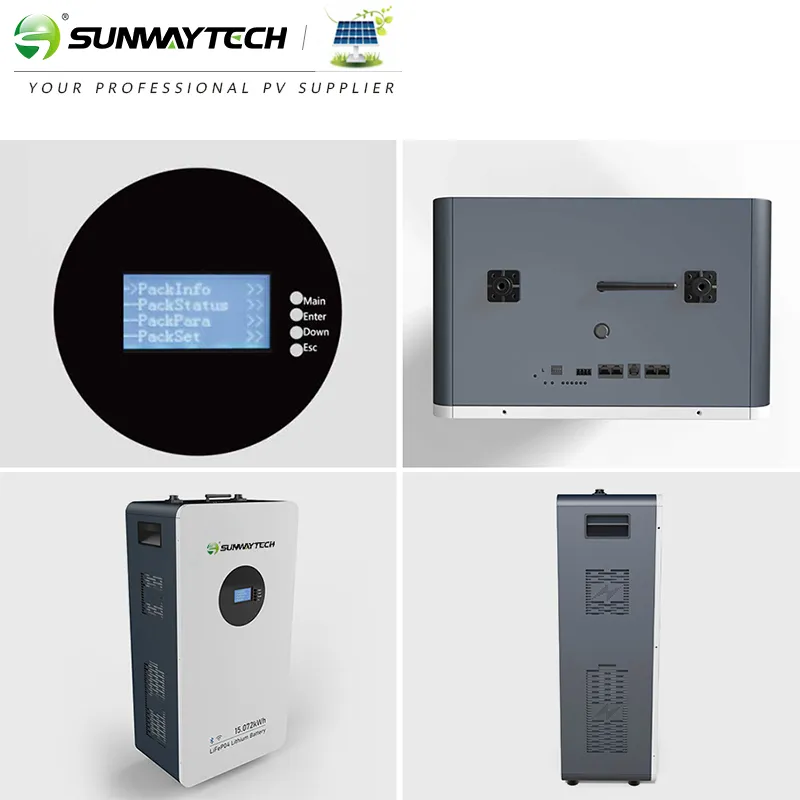
Its SUNWAY 16KWH Residential Energy Storage Battery uses LiFePO₄ technology and complies with CE, EMC, UN38.3, and MSDS requirements. The standard-height design is intended to reduce installation space, while the modular structure supports up to 15 units in parallel.
The battery is compatible with a broad range of hybrid and battery inverters and can be used for self-consumption, backup, and off-grid applications. Its specified cycle life exceeds 6,000 cycles. The design also incorporates self-developed BMS, cell, and pack technologies, together with pre-charge, balancing, remote data history, and firmware upgrade functions.
Installation Planning Should Come Before Delivery
Technical specifications need to be connected with actual site conditions. Installers should confirm expected household loads, backup requirements, solar generation, battery capacity, inverter selection, and communication methods before placing equipment on site.
Physical conditions should also be reviewed. Battery dimensions, installation access, cable routes, protection devices, and space for possible expansion can affect the final arrangement. Planning these details early can reduce adjustments during installation.
For international procurement, certification requirements should be checked according to the destination market and project needs. Sunway Solar serves overseas photovoltaic and storage customers, but installers and distributors still need to confirm which technical documents and compliance requirements apply to each project.
Commercial Lessons at Residential Scale
Residential storage does not need the same scale of engineering as a large solar project, yet the decision process can follow similar principles. Load patterns define how storage will be used, compatibility affects system integration, and modular planning can prepare the installation for changing electricity demand.
The useful lesson from commercial suppliers is therefore not simply to select a larger or more advanced battery. It is to treat storage as part of a complete energy system. When residential installers connect battery specifications with real household consumption, inverter requirements, site conditions, and future plans, the final design has a clearer technical basis.


