
The Fastest-Rising Sports of 2025: Tactical Evolution and Global Momentum
Did the window in your sports app in 2025 scroll? Yes, it turned out to be a landscape in motion. The generational replacement of the new sport is racing skyward even as football continues to dominate airwaves, as matches are getting faster, tactics much more refined, and viewers whose appetite can no longer be satiated by tradition.
What is behind the increase? It is not only sportsmanship or freshness. It’s precision. Structure. The games that pay attention to pattern recognition, quick decision-making, and strategic movement are attracting those who formerly spent the weekend watching xG maps and heat maps at Premier League matches. Today, the same heads are unable to stop thinking about the curved tables, glass-bricked courts, and biometric tackle areas.
Smart Viewers, Smarter Sports
What fans really want now is not only action but angles as well. New tactical consciousness is forming what individuals observe. The ones that hit the right chord are the ones that have a purpose behind each movement and where order is more important than disorder. New sports are not only keeping alive but also exploding because of that.
See Teqball. On a concave table, played with the body (no hands allowed), it is football in the form of a discrimination game. When Hungary was matched with Brazil in the semifinal of the 2025 Teqball World Finals in Budapest, there was as much tension in the air as a Champions League final, condensed into three games of unrivaled command and suspense.
Its clean format, quick rallies, and clear scoring have endeared the game to people who stream or follow statistics. It’s even being listed now alongside emerging esports and online casino games real money, as its short-round structure and tactical transparency prove ideal for real-time betting and digital gamification. It’s a rare sport that looks beautiful and reads like code.
Precision on Display: Padel and Drone Racing Take Off
Just one section over, two very different sports are riding similar waves of popularity: padel and drone racing. One’s analog, all footwork and spin. The other’s pure digital adrenaline. But both are growing because they blend spectacle with structure, and they’re built for the screen.
Padel, long popular in Spain and Latin America, has now gone global. The closed court and doubles system of the game is a shootout with feints and rebounds and shots at odd angles, needing a read more than a smash. At the 2025 Padel Premier in Buenos Aires, the sold-out crowd wasn’t just watching—they were reading patterns: crosscourt traps, wall-play baits, baseline overloads.
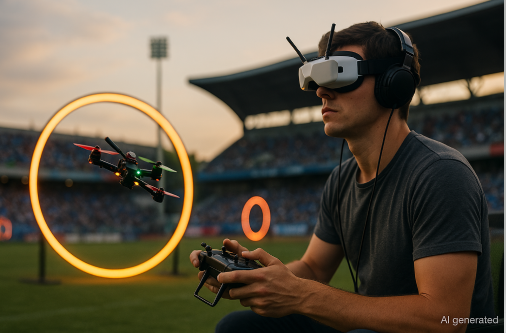
Drone racing, on the other hand, is speed and chaos on the surface—until you watch closely. Races are won not just on reflexes but on pre-mapped flight lines, boost control, and navigation logic. In Seoul, during the Drone World Tour Finals, two leaders swapped positions three times in one lap—each overtake predicted moments earlier by AI-assisted overlays showing momentum and drift curves. Strategy has landed at 160 km/h.
Kabaddi: A Tactical Revolution in Real-Time
Kabaddi, rooted in tradition, has become a modern-day showcase of pressure-based defense and explosive counters. In 2025, the Pro Kabaddi League transformed broadcasts with real-time analytics: stamina meters, tackle-zone heatmaps, and live probability models.
The structure is ideal: one attacker, seven defenders, and thirty-second raids. Each step is pivotal. In the recent clash between Jaipur and Delhi, viewers could observe a raider’s oxygen levels on a live stream, and analytics predicted his chances of escaping based on formation breadth, previous match fatigue, and more.
Kabaddi has evolved to a different level, transforming the sport into an experience rather than mere nonstop entertainment. The feedback loops created by mid-game commentary are not ancillary—they’re part and parcel of the fan experience.
Betting sites adapted to this flow as well. One instance was during the April match, where fans using Melbet could view a tackle-likelihood tracker that updated in real time as the defenders moved. Within a raid, escape odds dropped from 44% to 19%—and the platform rendered this visual before the actual takedown. It clicked with the spectators and heightened the enjoyment of the sport beyond just wagering.
Metrics Speak Louder Than Hype
Teqball, padel, drone racing, and Kabaddi are not the only phenomena on social media. They are even beating conventional metrics in digital, betting market, as well as search engines.
And finally, before we get into the figures, it is important to say that growing does not mean noise; it means traction. It is a question of number because many people are not only trying a sport, they are engaged in it, they know something about it, and they are developing patterns around it.
| Sport | Search Growth (YoY) | Betting Volume Growth | TikTok/IG Viral Spike |
| Teqball | +162% | +47% | +210% |
| Kabaddi | +88% | +63% | +140% |
| Padel | +110% | +39% | +125% |
| Drone Racing | +95% | +34% | +170% |
| Pickleball | +73% | +22% | +90% |
These aren’t short-term spikes. They’re signs of long-term viability—fueled by tactical immersion, digital interactivity, and formats that work across screens.
What They Have in Common: Built for the Now
While each sport has its own identity, they share a blueprint. It’s not about nostalgia. It’s about logic—formats that adapt to how people actually watch, bet, and engage today.
Before listing those shared traits, it’s worth noting that these aren’t “alternative” sports anymore. They’re structurally sound, tech-integrated, and built to scale.
What Links the Fastest-Rising Sports of 2025:
- Tactical systems that reward repeat viewing and strategic understanding
- Compressed formats with minimal dead time and constant engagement
- Optimized for mobile and second-screen interaction
- High shareability (clips, micro-plays, stat breakdowns)
- Betting-ready design: clear outcomes, real-time predictive tools
This combination makes them sticky. Not because they’re trendy but because they’re designed for the way modern fans think.
A perfect example came just last month when the Padel Masters in Rotterdam introduced live tactical overlays in partnership with Sportvision and StreamCast. Viewers could toggle between angles, receive instant replay breakdowns of positioning errors, and access predictive stats mid-rally. Clips from a single 9-shot rally between Navarro/Galán and the Swedish duo reached over 4.6 million views in 48 hours on TikTok, with betting apps reporting a 22% surge in live-stake volume during tactical replay moments. That’s the blueprint in action—real-time logic built for attention.

Where It’s All Headed
The rise of tactical sports in 2025 isn’t a rejection of tradition. It’s a response to attention. Fans want depth. They want pace. They want meaning behind the motion.
And the sports rising now—Teqball, padel, Kabaddi, drone racing—deliver exactly that. They compress complex strategies into accessible formats. They reward learning. And they allow fans to engage as thinkers, not just cheerleaders.
This shift also marks a generational reset in how sport is valued. Viewers aren’t waiting for broadcast networks to validate what matters—they’re watching niche finals on Twitch, analyzing movement grids on Discord, and placing live bets based on heatmaps rather than gut feelings. The authority no longer sits in legacy—it flows with utility, intelligence, and clarity.
The future of sport isn’t less emotion—it’s more logic. And it’s already here.